

In the first part of Attar in India, Moosa Khan, the current owner of Ali Brothers Perfumers, imparted some basic information about attars which readers found of great interest. In this article, readers will learn even more about attars. I am again grateful to Mr. Moosa Khan for sharing his invaluable knowledge with Fragrantica.
I always believed Darbar and Majmua were attars, but they are not. Would you explain why?
Majmua and Darbar are not attars because attars are extracted from botanical sources through the process of Hydro (Deg-Bhapka) and Steam distillation. There is no need of distillation in making Majmua and Darbar. Because they are made by combining several fragrances, they are just scents.
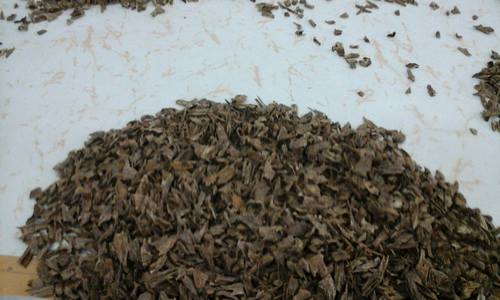 Agarwood chips
As you previously explained the difference between essential oil and attar, essential oils cannot be directly worn on the skin while attars can be. If EOs are laid on the base of sandalwood oil, can they be used instead of attar?
Yes, Essential oils and Attars are totally different. Essential oils are not worn on clothes and skin due to their harsh aroma. Essential oils are basically used for medicinal and therapeutic purposes and for that they are first diluted in carrier oil. There is one more thing to add. Several EOs simply cannot be adulterated in Sandalwood oil. While some can be, even then they cannot be worn as attar for their harsh and pungent aroma.
Attars can be applied directly on the skin for their soothing fragrance. It is recommended to apply Attar on the ulnar artery to feel its fragrance and ruh (soul). It's said that the ulnar artery takes the aroma direct to the heart and gives its best result. Attars are also used in tobacco, food products and cosmetics etc.
People often mistake fragrance oils for attars. How can they differentiate between them?
Attars are only extracted from plants, flowers, roots etc. while fragrance oils are a combination of several fragrances or synthetic materials laid on the alcohol as a base.
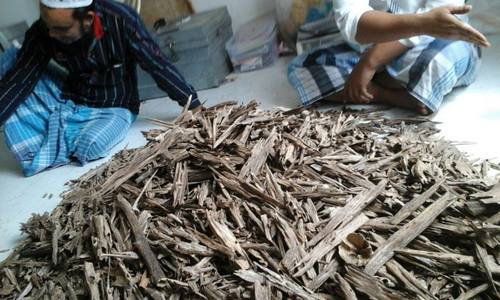 Agarwood in preparation
I see difference in the prices of attars, let's say, vetiver. I have seen the most expensive and the cheaper ones and so is the difference in its fragrance. Is it because the expensive one is of superior quality and the cheaper one is of poor quality?
Nowadays varieties of attars, essential oils, absolutes and hydrosols are available in the market at different rates due to which people may easily get confused. There can be many reasons for different rates some of which are regional, seasonal and methods of distillation. Cheap attars are made by diluting DOP. Attars can be totally fake, too. There is a wide variety of chemicals available in the market as substitutes. One should be careful in buying attars and essential oils and for this, it is important to look for reliable and authentic sellers. alking of the fragrance of vetiver, it is very pleasant. If you put one drop of it and rub it, it would last for many days. The fragrance of an authentic attar is always pleasant and soothing on the nerves and not harsh.
I would like to add more on the prices of attars as why they are cheap or expensive, apart from fake or substitutes made of chemicals. Speaking particularly of quality, season and region are the main factors playing their part. Some regions for particular Essential oils and Attars are best apparently, their cost is always high. Seasonally, let's say, rose, April to July and September to November are the best times to harvest superior quality roses and due to this they are expensive with respect to quality and demand.
Do you also distill Attar Mitti, the scent of Earth?
Attar mitti is called Baked Earth in English. It is an attar which is neither floral nor herbal. It gives the fragrance of wet earth of summer. The earth is collected from Ganges river it is then dried and made into bricks by baking in a furnace thoroughly for several hours. When it is prepared, it is then poured into Deg on the base of Sandalwood oil. Baked Earth is known for its nurturing fragrance similar to that of rain drops on earth. This Attar is used for Medicinal purposes, in cosmetics, food products, fragrances etc.
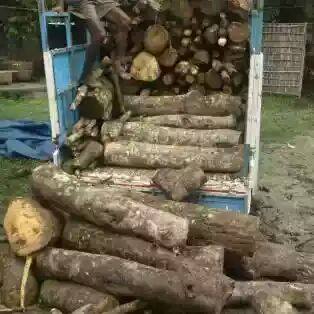
Agarwood (oud) has huge a market in the Middle East and the West. What is its current market status in India? What variety of agarwood is found in India and in what regions?
Agarwood is used in attars, fragrances, incense sticks, cosmetics etc. It's in great demand in India. There are many varieties of Agarwood, Aquilaria agollocha, Aquilaria malaccensis, Aquilaria Crassna, etc. We have mainly Aquilaria Agollocha and it's grown in Assam which bears the most suitable soil for agarwood.

